Which bottom-dwelling fish keep the sand clean?
Transparency: this article contains Amazon affiliate links. If you buy through them, we earn a small commission at no extra cost to you — it never influences our advice. Learn more
“I’d like a fish that cleans the bottom.” It’s one of the most common requests in aquatic shops, and it stems from a misunderstanding. There’s no such thing as a vacuum-cleaner fish that makes waste disappear: a bottom dweller eats leftovers, turns over the surface of the sand… and produces waste of its own.
But chosen well, bottom dwellers do a real job, and they’re among the most endearing residents of an aquarium. Here are the ones to pick for a sand substrate, and the ones to steer clear of despite their reputation as “cleaners”.
The essentials. No fish replaces vacuuming the substrate. For a sand bottom, the best choices are Corydoras (a group of 6 or more, 80 L tank), dwarf Corydoras (8–10, from 54–60 L) and kuhli loaches (5–6 or more, 80 L). The bristlenose pleco (100 L) grazes algae and leftovers. All of them need their own sinking food. Steer clear of the common pleco and the Chinese algae eater, which grow huge.
What a bottom dweller really does
A bottom dweller doesn’t “clean” in the way people imagine. On the other hand, it:
- eats the leftover food that falls to the bottom before it rots;
- stirs the surface of the sand, which limits the spots where debris gets packed down;
- livens up the bottom of the tank, an area that’s often empty.
It also produces its own droppings. So the real cleaning is still down to you: don’t overfeed and vacuum the substrate every week. Chronic overfeeding is, in fact, one of the main causes of cloudy water.
The best bottom dwellers for a sand substrate
| Species | Adult size | Minimum tank | Group | What it does |
|---|---|---|---|---|
| Corydoras (C. paleatus, C. sterbai…) | 5–7 cm | 80 L | 6 or more | Sifts the sand, eats leftovers |
| Dwarf Corydoras (C. pygmaeus, C. habrosus) | 2–3 cm | 54–60 L | 8–10 | The nano version; C. pygmaeus also swims in mid-water |
| Kuhli loach (Pangio kuhlii) | 8–10 cm | 80 L | 5–6 or more | Burrows into the sand, active at night |
| Bristlenose pleco (Ancistrus sp.) | 12–15 cm | 100 L | 1 male only | Grazes algae and wood, eats leftovers |
| Burrowing snails (Malaysian trumpet snails) | 2–3 cm | Any tank | — | Aerate the sand deep down |
Corydoras: the kings of the sand
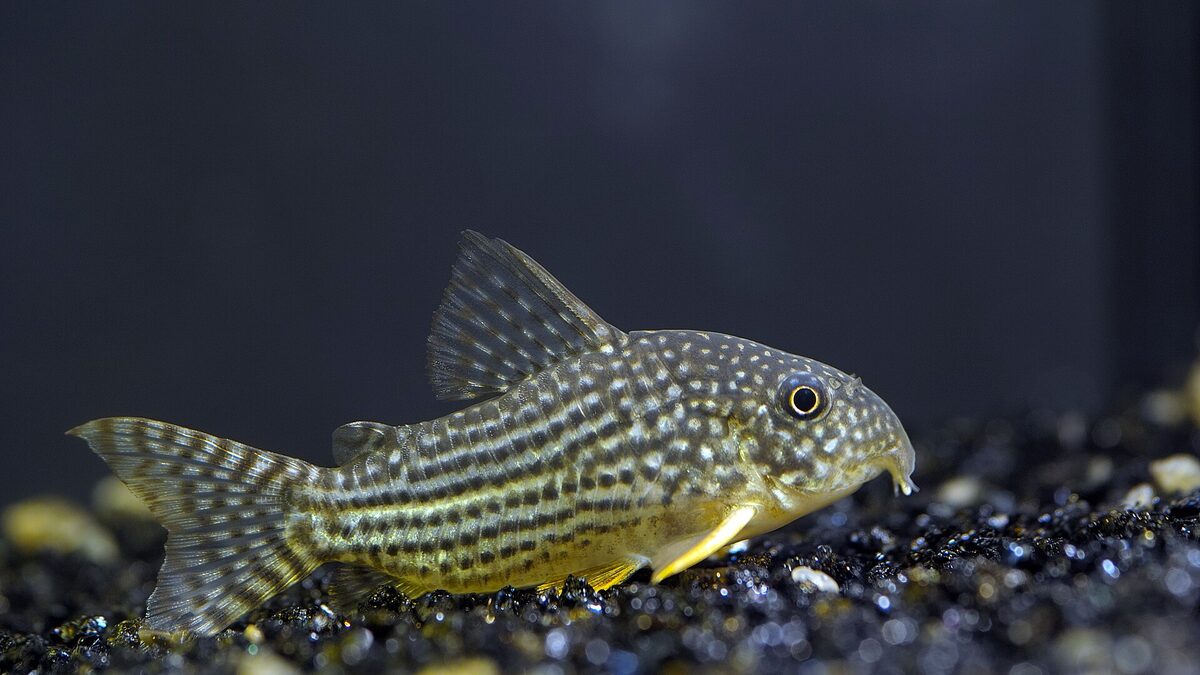
Peaceful, sociable little catfish, Corydoras spend their days sifting the substrate with their barbels. They need to live in a group of at least 6 of the same species, on fine sand that won’t injure their barbels. For the details, see how many Corydoras in an 80L tank.
For a small tank, dwarf Corydoras (Corydoras pygmaeus, C. habrosus) are an excellent alternative: 2 to 3 cm, in a group of 8 to 10, from 54–60 litres.
The kuhli loach: the shy one
With its striped, eel-like body, the kuhli loach is fascinating… when you catch a glimpse of it. It lives buried in fine sand and comes out mostly at night. Plan for a group of at least 5 to 6 (on its own, it stays hidden all the time), hiding places, and a sponge over the filter intake: it loves squeezing in everywhere.
The bristlenose pleco: the algae grazer
The bristlenose pleco isn’t a sand sifter but a grazer: it scrapes algae off the glass, the rocks and above all the wood, which it rasps to help its digestion. Include a piece of driftwood in the décor — see our guide to rocks and driftwood for aquariums — and a tank of around 100 litres. Only one male per tank: males fight over territory.
The fake “cleaners” to avoid
Some fish are sold as “cleaners” even though they’re unsuitable for a home aquarium:
- The common pleco (Pterygoplichthys): sold at a few centimetres long, it can grow beyond 40 cm and produces huge amounts of waste.
- The “Chinese algae eater” (Gyrinocheilus aymonieri): it reaches about 25 cm, loses interest in algae as it grows and can become aggressive.
- The clown loach (Chromobotia macracanthus): beautiful, but it lives in groups and often exceeds 20 cm; it needs several hundred litres.
Always check the Latin name and the adult size before buying a bottom dweller.
The right sand and how to look after it
For bottom dwellers, the substrate matters as much as the fish:
- fine sand with rounded grains (about 0.5 to 1.5 mm);
- a depth of 3 to 5 cm, no more where the fish dig;
- no angular gravel that would damage their barbels.
Fine aquarium sand
Our pick- Fine, rounded grains that are gentle on barbels
- Lets kuhli loaches burrow
- Waste stays on the surface, easy to siphon off
- Rinse thoroughly before filling the tank
- Doesn't feed plants: use root tabs for hungry plants
Amazon affiliate link. Price and availability may change at any time.
For rooting plants, put a layer of aquasoil or nutrient substrate under the sand, or use fertiliser tablets.
As for maintenance, the key job is vacuuming: every week, during the water change, run the gravel vac just above the sand, without pushing it in, to pick up the debris without sucking up the sand.
Gravel vacuum (substrate siphon)
Our pick- Picks up debris and does the water change in one go
- The real "bottom cleaner", the one no fish can replace
- Models with a priming bulb: no need to start it by mouth
- On very fine sand, hold the tube slightly above it so you don't suck it up
Amazon affiliate link. Price and availability may change at any time.
Feeding them properly
This is the most widespread mistake: thinking a bottom dweller lives off the other fish’s leftovers. Leftovers fall short in both quantity and quality. It needs its own food that sinks to the bottom:
Bottom feeder tablets (sinking wafers)
Our pick- Sink straight to the bottom, out of reach of surface fish
- Break down slowly: the whole group has time to eat
- Plant-based versions available for bristlenose plecos
- Uneaten leftovers pollute the water: adjust the amount
Amazon affiliate link. Price and availability may change at any time.
Feed your bottom dwellers in the evening, just before lights out. Corydoras and kuhli loaches are mostly active at dusk, and the other fish, less active in the dark, will finally leave the wafers to them.
The little cleaners that aren’t fish
To round out the team, two kinds of invertebrate are a great help:
- Malaysian trumpet snails, which burrow and aerate the sand deep down — but be warned, their numbers grow in line with the food available;
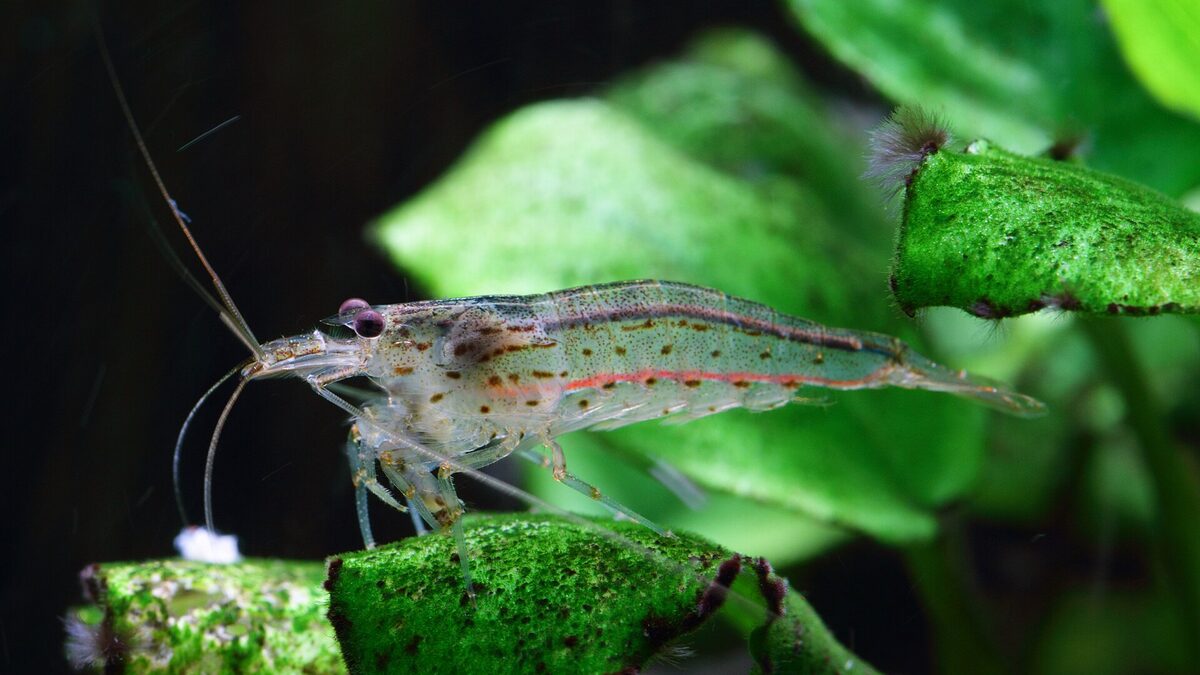
- shrimp, which pick up fine debris between the plants: see how many Amano shrimp for a planted tank and, for the glass, our nerite snails.
Before adding bottom dwellers
- My substrate is fine sand with rounded grains
- The volume suits the species I've chosen (54, 80 or 100 L)
- I'm planning a proper group (6 Corydoras, 5–6 kuhli loaches…)
- I've checked the Latin name and the adult size
- I have sinking wafers to feed them in the evening
- I'll keep vacuuming the substrate every week
A group of Corydoras on lovely fine sand is one of the most endearing sights in fishkeeping: they sift, rest together and sometimes even seem to wink. We take off half a point because they're too often bought for the wrong reasons: they're companions in their own right, not refuse collectors. Well fed and kept in a group, they live for years.
Conclusion
No fish will clean the sand for you: vacuuming and sensible feeding remain the foundation. To liven up and maintain a sand bottom, choose Corydoras in a group of at least 6 (80 L), dwarf Corydoras in a small tank, or kuhli loaches in a group; add a bristlenose pleco if you want an algae grazer. Give them their own food, and steer clear of “cleaners” that grow into giants.
To find out more about the star species, read how many Corydoras in an 80L tank. And if you’re looking for tank mates for them, how many neon tetras in 60 litres will help you plan the tank.
How many fish in my tank?
Enter your tank volume and the species you want — we give a cautious estimate.
Indicative estimate. It also depends on filtration and plants, and assumes a cycled tank. When in doubt, stock less: animal welfare comes first.
Frequently asked questions
Which fish cleans the bottom of the aquarium?
No fish will really clean the bottom for you. Corydoras and kuhli loaches sift through the sand and eat leftover food, which helps a lot, but they also produce their own waste. Regular vacuuming of the substrate is still essential.
How many Corydoras for a sand substrate?
Corydoras live in groups: allow at least 6 of the same species, in a tank of at least 80 litres for the common species. Dwarf Corydoras, such as Corydoras pygmaeus, make do with 54 to 60 litres, in a group of 8 to 10.
Is a pleco a good cleaner?
The ‘common pleco’ sold in shops can grow beyond 40 cm and produces huge amounts of waste: it isn't suited to a typical home aquarium. If you're after an algae eater for the bottom, the bristlenose pleco (Ancistrus), which stays around 12 to 15 cm, is a much better option for a 100-litre tank.
Do bottom feeders need feeding?
Yes, always. The other fish's leftovers aren't enough to feed them properly. Give them sinking wafers or tablets, ideally in the evening just before lights out, as many are most active at dusk.
What sand is best for bottom-dwelling fish?
A fine sand with rounded grains, about 0.5 to 1.5 mm, laid 3 to 5 cm deep. It lets Corydoras sift without damaging their barbels and kuhli loaches bury themselves. Avoid angular or sharp gravel.