Nerite snails for algae: how many do you need?
Transparency: this article contains Amazon affiliate links. If you buy through them, we earn a small commission at no extra cost to you — it never influences our advice. Learn more
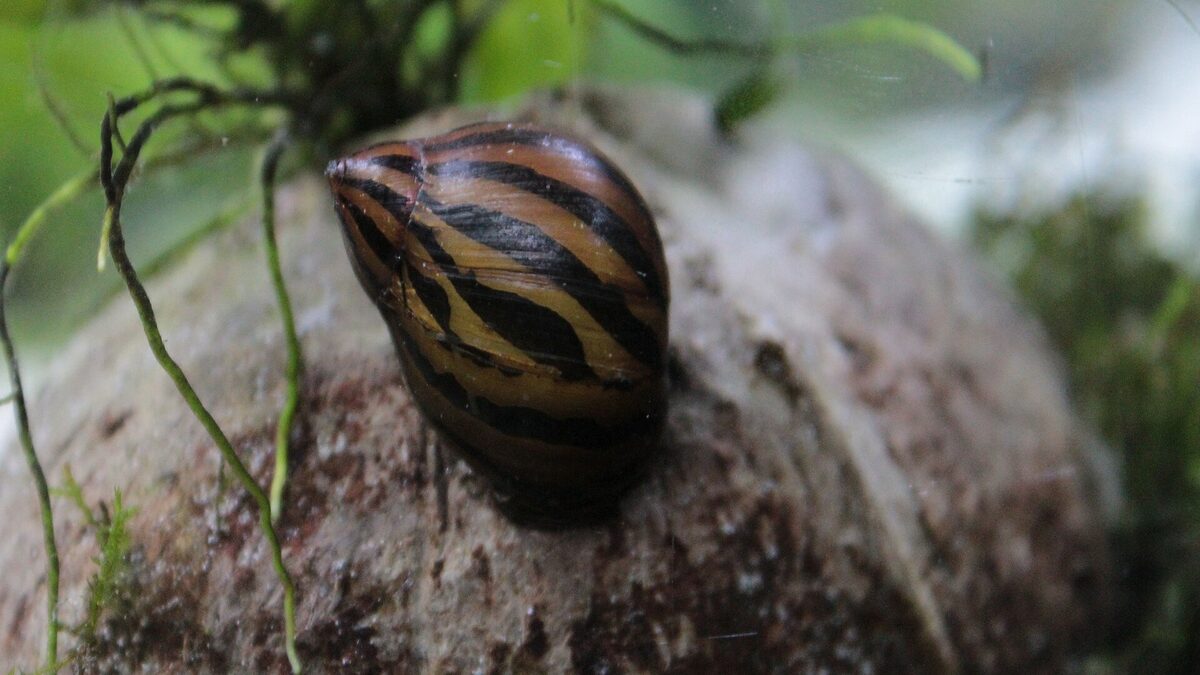
They’re often bought on impulse, at the sight of a tank overrun with algae: “pop two or three nerites in there, they’ll clean the lot”. And it’s partly true — the nerite is probably the best clean-up snail in freshwater fishkeeping. But it doesn’t eat all algae, and it never fixes the cause of the problem.
Here’s how many to add, what they really do, and what you need to know before you bring any home.
The essentials. Allow roughly one nerite per 20 to 25 litres: 1 in a 20–30 L nano, 2 to 3 in a 60 L, 4 to 5 in a 100 L. Nerites excel against film algae, green spot algae and diatoms, but barely touch hair algae. They don’t breed in fresh water (no invasion), but they lay small white eggs on the décor. They need fairly hard water (pH ≥ 7) and a lid.
How many nerites for your tank
An adult nerite measures 1.5 to 2.5 cm and grazes non-stop. The right number depends mainly on how much algae is available: put too many nerites in a clean tank, and they starve.
| Your aquarium | Suggested nerites | Note |
|---|---|---|
| Nano 20–30 L | 1 | Plenty for the glass |
| 54–60 L | 2–3 | The right balance for a planted tank |
| 80 L | 3–4 | Depending on how much décor there is to clean |
| 100 L and up | 4–5 | Add more if the algae persists |
For a specific volume, the calculator further down the page gives you a cautious range. It’s better to start low and add another nerite later than to starve the whole group.
What nerites really eat (and what they leave)
The nerite is a “grazer”: it scrapes hard surfaces and leaves. It’s formidable against:
- green film algae on the glass;
- green spot algae, which is very tough and which few animals will tackle;
- diatoms, the brown coating typical of new tanks — see our article on brown diatoms in a new tank.
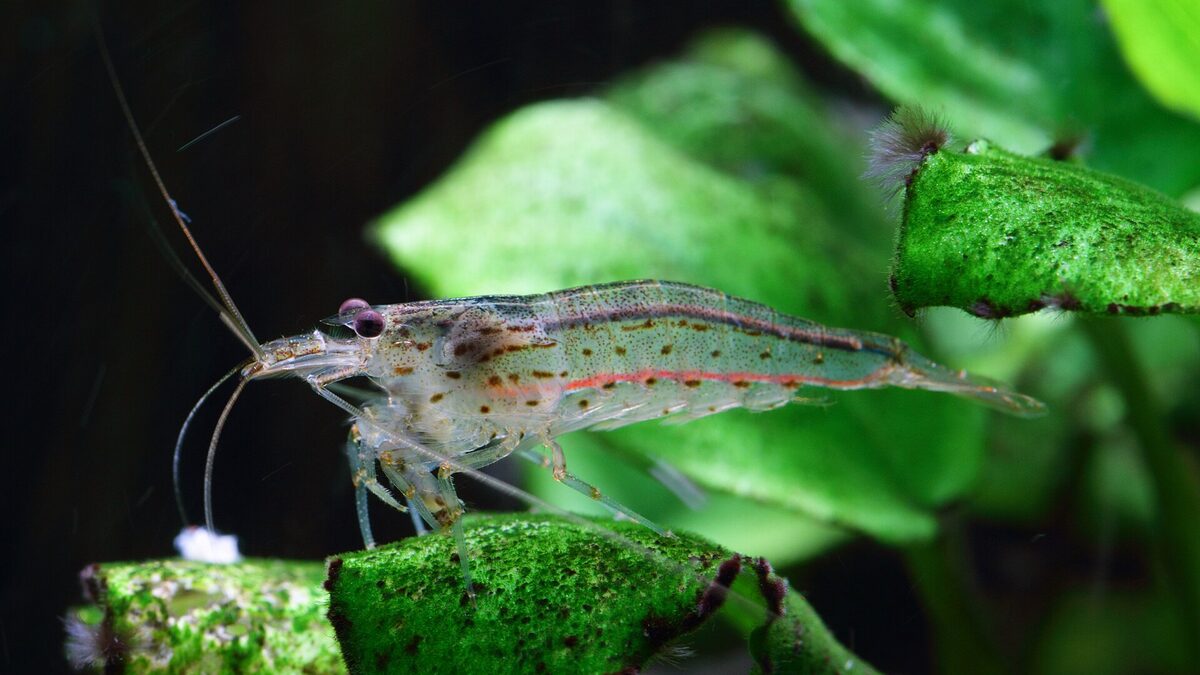
On the other hand, it’s not very effective against hair algae (the green “hair”), and it can do nothing about green water, where the algae floats in suspension. For hair algae, the Amano shrimp is far better suited: see how many Amano shrimp for a planted tank.
| Animal | Strength | Limitation |
|---|---|---|
| Nerite snail | Film algae, green spot algae, diatoms | Barely touches hair algae |
| Amano shrimp | Fine hair algae, soft deposits | Less effective on hard algae |
| Ramshorn and bladder snails | Leftover food, damaged plants | Breed without limit |
Above all: no animal can replace a balanced tank. If the algae keeps coming back, the lighting, the feeding or the nutrients are out of balance. Our guide to green hair algae covers the real causes, and the one on green water explains why snails can’t do anything about it.
A common cause is lighting that stays on for too long. A simple timer sorts that out once and for all:
Aquarium light timer
Our pick- The same lighting period every day, without having to think about it
- Tackles one of the main causes of algae
- Very cheap and set up in a minute
- Mechanical models tick slightly
Amazon affiliate link. Price and availability may change at any time.
No invasion… but eggs
This is the nerite’s big advantage over other snails: it can’t reproduce successfully in fresh water. Its larvae need brackish water to develop. So you’ll never end up with a population explosion, unlike with ramshorn or bladder snails.
The flip side: it sticks small, hard white eggs on the glass, rocks and wood. They’re harmless but stubborn, and can stay put for weeks. On the glass, a blade scraper removes them in seconds:
Blade scraper for glass
Our pick- Lifts the hard eggs a sponge won't shift
- Long handle: no need to plunge your arm in
- Also effective on green spot algae
- For glass tanks only: a blade scratches acrylic
- Take care around the silicone in the corners
Amazon affiliate link. Price and availability may change at any time.
Nerites are explorers: it's not unusual to find one above the waterline, or even on the cabinet. Fit a lid or lower the water level by 2 to 3 cm. And if you find one upside down on the bottom of the tank, turn it the right way up: they sometimes struggle to right themselves.
The water and conditions they need
A nerite’s shell is made of calcium carbonate. In water that’s too soft or acidic, it deteriorates: white patches, then a shell that erodes and eventually develops holes. Its needs:
- pH: 7 to 8.5, ideally above 7;
- hardness: medium to high (GH of 6 to 8 minimum);
- temperature: 22 to 28 °C;
- a cycled, mature tank where a little biofilm has already built up.
Most hard tap water suits it very well: see our article on tap water in your aquarium. On the other hand, avoid any product containing copper (some medications and fertilisers), which is toxic to snails.
When the algae runs out
That’s the nerite’s paradox: it ends up clearing out its own larder. In a tank that’s clean again, it weakens and can starve. If you can no longer see any algae on the glass or the décor, top up its menu 2 to 3 times a week:
Algae wafers for snails and shrimp
Our pick- Sinking wafers made from algae or spirulina
- Break down slowly: the snails have time to eat
- Also suit shrimp and bottom dwellers
- Remove leftovers after a few hours so they don't pollute the water
Amazon affiliate link. Price and availability may change at any time.
A slice of blanched courgette, removed after a few hours, also does the job nicely.
Which tank mates?
The nerite is completely peaceful and lives alongside the vast majority of fish and shrimp. Just avoid snail eaters: pufferfish, some loaches (botias) and large cichlids. Small community fish, such as neon tetras or guppies, ignore it completely.
Before you add nerites
- My tank is cycled and has been running for a few weeks
- My water is fairly hard: pH 7 or above
- I'm planning roughly one nerite per 20 to 25 litres
- Lid in place, or water level lowered by a few cm
- No copper-based medication or fertiliser in the tank
- I've dealt with the cause of the algae (lighting, feeding)
For keeping the glass and décor clean, the nerite is unbeatable: discreet, practically indestructible in hard water, and incapable of overrunning the tank. We knock off half a point for its white eggs, which soon spoil a nice aquascape, and because it leaves hair algae to others. Paired with a few Amano shrimp, it makes a formidable clean-up crew.
Conclusion
Allow roughly one nerite per 20 to 25 litres: just one in a nano, 2 to 3 in a 60 L, 4 to 5 in a 100 L. It keeps the glass and décor beautifully clean, doesn’t breed in fresh water and leaves your plants alone. Just bear its limits in mind: it barely eats hair algae, doesn’t fix the cause of algae and needs fairly hard water.
To complete your clean-up crew, see how many Amano shrimp for a planted tank. And if it’s the substrate that worries you, read which bottom-dwelling fish keep the sand clean.
How many fish in my tank?
Enter your tank volume and the species you want — we give a cautious estimate.
Indicative estimate. It also depends on filtration and plants, and assumes a cycled tank. When in doubt, stock less: animal welfare comes first.
Frequently asked questions
How many nerite snails in a 60-litre tank?
Allow 2 to 3 nerites in a 60-litre tank, or roughly one per 20 to 25 litres. That's enough to keep the glass and décor clean without them running short of food. A 20 to 30-litre nano tank only needs a single nerite.
Do nerite snails breed in an aquarium?
They lay eggs, but their larvae can't develop in fresh water: they need brackish water. So the population never explodes. The downside is the small, hard white eggs they stick on the glass and décor.
What do nerite snails eat when there's no algae left?
A nerite can starve in a tank that's too clean. If algae runs short, give it an algae or spirulina wafer 2 to 3 times a week, or a slice of blanched courgette, removed after a few hours.
Why does my nerite snail climb out of the water?
Nerites like to explore above the waterline, especially just after being introduced or if the water quality is poor. Test the water, then fit a lid or lower the water level by 2 to 3 cm so they can't escape.
Do nerite snails eat plants?
No. They graze the algae film and biofilm on the leaves, but don't attack healthy plants. That's one of the big advantages of nerites in a planted tank.