Guppy care: the complete guide
Transparency: this article contains Amazon affiliate links. If you buy through them, we earn a small commission at no extra cost to you — it never influences our advice. Learn more
For many of us, the guppy was our very first tropical fish — and that’s no accident: it’s colourful, lively, undemanding and breeds without any encouragement. But “easy” doesn’t mean “no rules”.
When guppies go downhill within a few weeks, it’s almost always the same story: a tank that wasn’t cycled yet, too many males for too few females, or a population explosion nobody planned for. This guide brings together everything you need to know so your guppies live long and stay in great shape.
The essentials. The guppy (Poecilia reticulata) is a small livebearer that lives 2 to 3 years. A group needs a cycled tank of at least 54–60 L, heated to between 22 and 26 °C, with fairly hard water (pH 7–8) and gentle filtration. Keep 1 male to 2–3 females (or males only), feed little but varied, and decide from the outset how you’ll handle breeding: that’s what makes the difference between a balanced tank and an overcrowded one.
Guppy fact file
| Feature | Guppy |
|---|---|
| Scientific name | Poecilia reticulata |
| Origin | North-eastern South America (Venezuela, Trinidad and Tobago, Guyana…) |
| Adult size | Male ≈ 3 cm · female 4 to 6 cm |
| Life expectancy | 2 to 3 years on average |
| Temperature | 22 to 26 °C (ideally 24–25 °C) |
| Water | pH 7 to 8 · moderately hard to hard water (GH ≈ 10–20) |
| Recommended volume | 54–60 L for a mixed group · ≈ 40 L for a few males |
| Temperament | Peaceful, active, sociable (lives in a group, not a tight shoal) |
| Breeding | Livebearer: a brood roughly every 4 weeks |
That last row is the most important in the whole table. Guppies don’t lay eggs: the female gives birth to fully formed fry that swim and feed within minutes. That’s what makes the species so easy to breed… and so easy to let get out of hand.
Choosing healthy guppies at the shop
A healthy guppy is easy to spot in a matter of seconds. Take the time to watch the sales tank before you pick out your fish:
- active, curious swimming, not stuck to the bottom or hanging at the surface;
- fins well spread, neither clamped against the body nor ragged;
- a rounded belly (not sunken), and a body free of white spots or cottony patches;
- no dead or sickly fish in the same tank — if there are, give that tank a miss, even for the others.
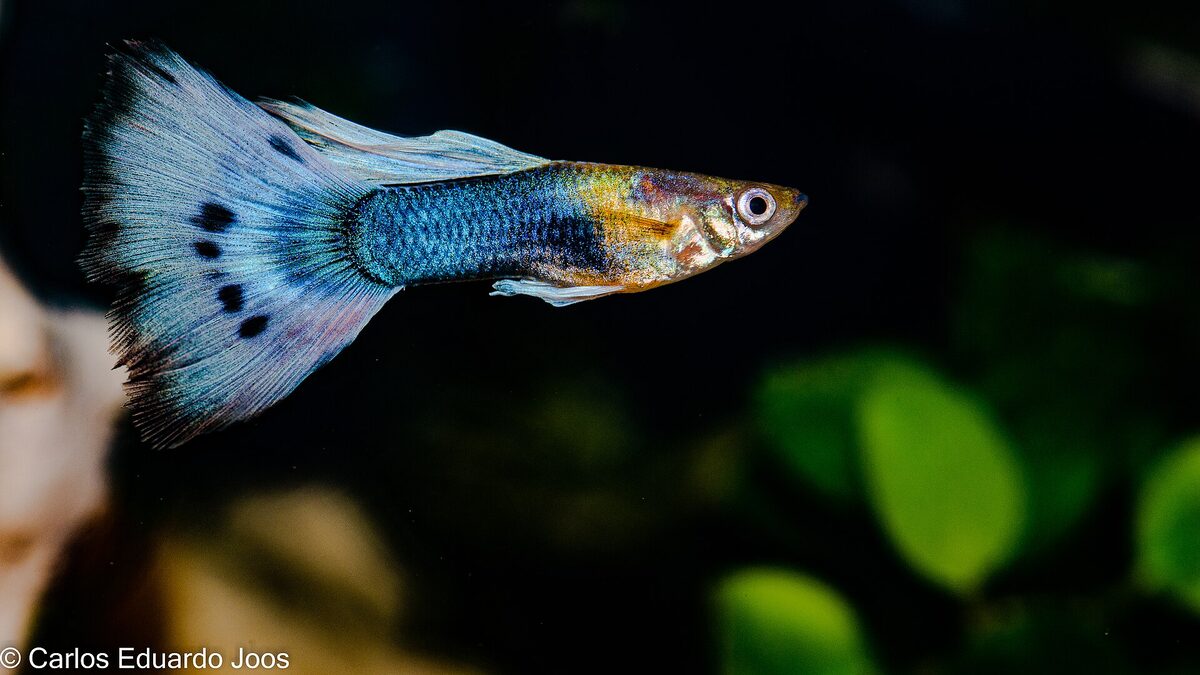
As for strains, so-called “fancy” guppies with oversized fins are spectacular but more delicate: years of selective breeding have made them less hardy and poor swimmers. For a first tank, guppies with more modest fins are the more relaxed choice.
Above all: never buy your guppies on the day you fill your aquarium. A new tank first has to grow the bacteria that break down waste — allow several weeks, as we explain in how long it takes to cycle a tank.
The ideal aquarium for guppies
Tank size
For a mixed group, aim for 54 to 60 litres minimum. The reason isn’t the guppy’s size but its breeding: numbers climb fast, and a larger volume copes better with the increase. A small males-only group can live in a well-maintained tank of around 40 litres. For precise figures, see our article how many guppies in 60 litres.
If you’re starting from scratch, a complete 60-litre kit is the simplest way to get everything in one go:
Complete 60 L aquarium kit
Our pick- Tank, lid, lighting and filter sized to work together
- A 60 L volume, ideal for a group of guppies
- Cheaper than buying each item separately
- The heater isn't always included: check before you buy
- The stock filter can create too much current for long-finned guppies
Amazon affiliate link. Price and availability may change at any time.
Filtration: effective but gentle
The guppy, especially the big-finned male, is not a strong swimmer. Too much current wears it out: it takes refuge in a corner and ends up weakened. Look for a filter with adjustable flow, or point the outlet at the glass. Our comparison HOB or internal filter for a 60L tank goes through the options.
If you’re planning to keep fry, an air-driven sponge filter is a brilliant option: it filters gently and doesn’t suck up the babies.
Air-driven sponge filter
Our pick- Very gentle intake: fry don't get sucked in
- Hosts lots of beneficial bacteria, ideal for stability
- Very cheap and child's play to maintain
- Needs a small air pump, which makes a slight noise
- Not very discreet in a decorated tank
Amazon affiliate link. Price and availability may change at any time.
Heating, plants and décor
The guppy is a tropical fish: a thermostatic heater is essential in most homes. To choose one, see what wattage heater for a 54L tank.
As for décor, guppies love a well-planted tank. Fast-growing plants use up nitrates, and dense clumps give harassed females and fry alike somewhere to hide. No CO2 needed: our selection of easy plants with no CO2 suits them perfectly.
Plant before you add the fish, and plant densely in at least one corner of the tank. A female who can get away from the males for a few minutes lives better and longer — and your fry will stand a real chance of growing up.
Water: temperature, pH and hardness
Guppies like their water warm, stable and fairly hard:
- Temperature: 22 to 26 °C, ideally 24–25 °C. Kept above 28 °C for long periods, a guppy ages faster; in summer, think about cooling your tank.
- pH: 7 to 8. Neutral to slightly alkaline water.
- Hardness: medium to high (GH of around 10 to 20).
Good news: across much of England — London, the South East and East Anglia in particular — tap water is hard, which suits guppies very well. Whatever you do, don’t try to soften it for them — our article on hard tap water explains when softening is useful (for other species) and when it isn’t. In soft-water areas (Scotland, Wales, North West England, Devon and Cornwall), guppies generally adapt, but avoid very soft, acidic water.
Either way, treat tap water with a water conditioner (it neutralises the chlorine) and check the parameters regularly: 0 ammonia, 0 nitrite, and nitrates as low as possible. A reliable water test kit is the best investment after the heater.
Males and females: getting the balance right
Telling them apart
- The male: small (≈ 3 cm), very colourful, with a large tail fin and an anal fin modified into a gonopodium, a pointed organ used for mating.
- The female: bigger (4 to 6 cm), rounder, often duller, with a fan-shaped anal fin. A dark patch near the belly (the “gravid spot”) gives away a pregnant female.
The right ratio
A male guppy spends his days chasing the females. If there are too few of them, they wear themselves out, hide and end up falling ill. Hence the golden rule: 1 male to 2 to 3 females, never the other way round.
In practice, you have three options:
- Males only — no breeding, and they’re the most colourful. This is the simplest option for a first tank.
- Mixed group (1 male / 2–3 females) — the most natural set-up, provided you have a plan for the fry.
- Females only — peaceful, but beware: a female bought from a shop is often already pregnant. She can store sperm and produce several broods over months, even with no male in the tank.
Feeding: little but varied
The guppy is an omnivore and is always hungry — which is precisely the trap. A good routine:
- as a staple: good-quality flakes or micro pellets, sized for its small mouth;
- 2 to 3 times a week: frozen or live foods (brine shrimp, daphnia), excellent for colour;
- a little plant matter: spirulina flakes, which it happily nibbles.
Give one or two small feeds a day, the equivalent of what they eat in 1 to 2 minutes. Uneaten leftovers rot and foul the water: overfeeding is one of the main causes of cloudy water.
Guppy and livebearer food
Our pick- Flakes or fine granules, sized for their mouths
- Formulas with a plant element (spirulina) suited to their omnivorous diet
- Easy to portion in small amounts
- Best supplemented with frozen food for a truly varied diet
- An opened tub loses its quality after a few months
Amazon affiliate link. Price and availability may change at any time.
Breeding: plan for it rather than put up with it
In a mixed group, breeding isn’t a possibility, it’s a certainty. A female gives birth roughly every 4 weeks (21 to 30 days depending on the temperature), usually to 20 to 50 fry. The young are adult at around 2 to 3 months… and the cycle starts all over again.
What happens to the fry?
Adult guppies will happily eat the fry. In a bare tank, almost none survive; in a heavily planted tank, some find shelter and grow up. This “natural control” slows the population growth without stopping it.
For effective hiding places, nothing beats a dense clump of Java moss, backed up by a few floating plants:
Java moss
Our pick- Grows without CO2 or strong lighting
- Forms dense clumps where fry can hide
- Attaches easily to a piece of wood or a rock
- Slow growth for the first few weeks
- Needs a trim now and then so it doesn't trap debris
Amazon affiliate link. Price and availability may change at any time.
Do you need a breeding box?
Breeding boxes (small boxes that hang in the tank to isolate the female) protect the fry, but they stress the female a great deal if she’s shut in too early or for too long. If you want to raise young, a small separate tank for the fry, or a heavily planted corner, is a better solution.
Feed the fry powdered food or crushed flakes, or even baby brine shrimp, in tiny amounts 3 to 4 times a day.
And the surplus?
If the population gets out of hand, offer your young guppies to a local fishkeeping club, to other hobbyists or to a shop that will take them. Never release them into the wild: it’s illegal and harmful to natural habitats.
Which tank mates for guppies?
The guppy is peaceful, but its small size and long fins mean you need to choose its neighbours carefully:
| Tank mate | Compatible? | Why |
|---|---|---|
| Corydoras | Yes (tank ≥ 80 L) | Peaceful, they live on the bottom and ignore the guppies |
| Platies, mollies | Yes | Same hard water, same temperament (mollies: tank ≥ 80 L) |
| Neon tetras | Possible | In compromise water (pH ≈ 7), in a shoal of at least 8 to 10 |
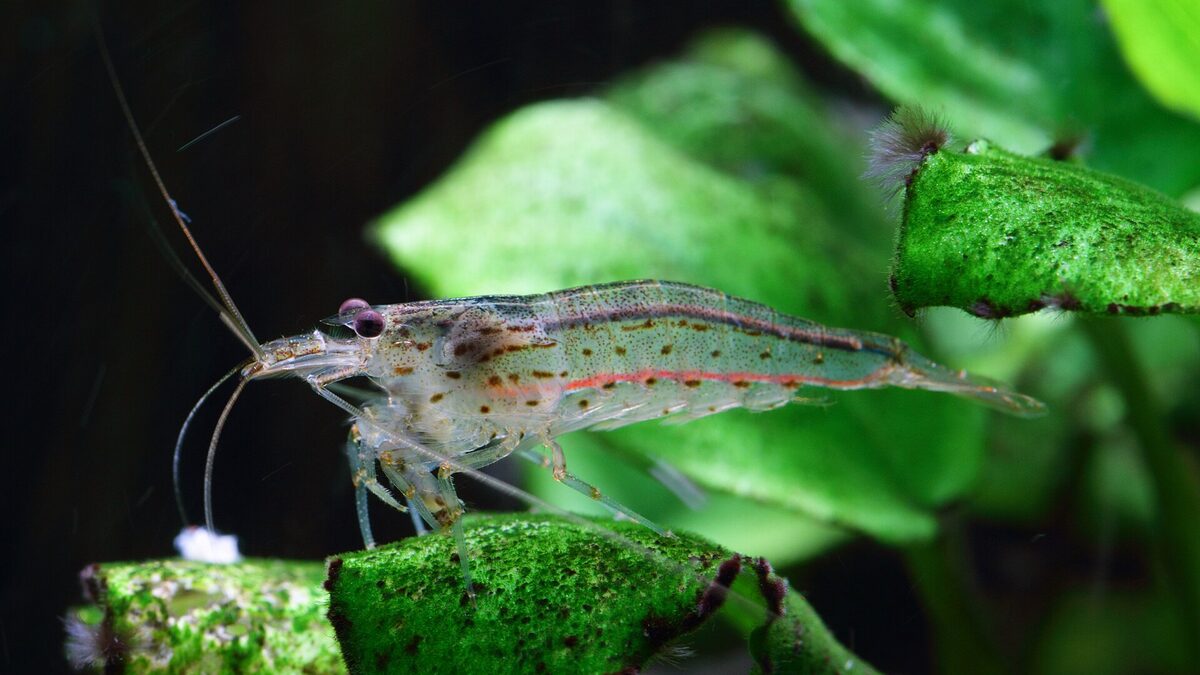
| Neocaridina shrimp | Possible | The adults get along, but guppies eat the shrimplets |
| Zebra danios | With caution | Very lively, they can nip long fins |
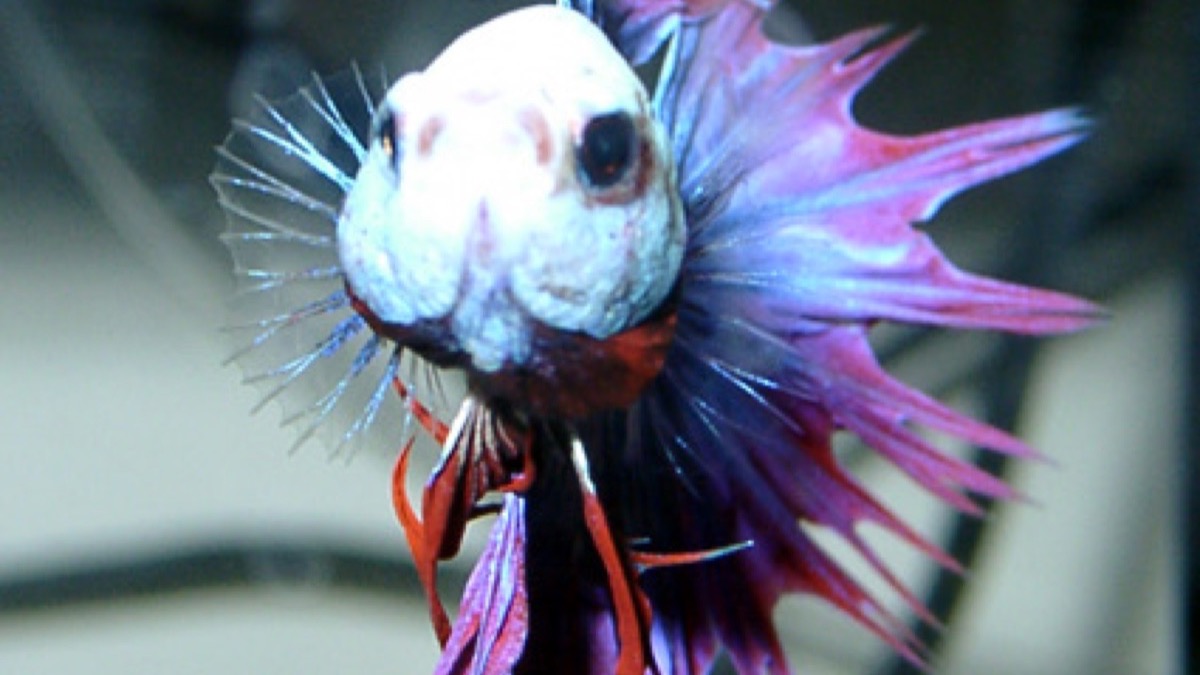
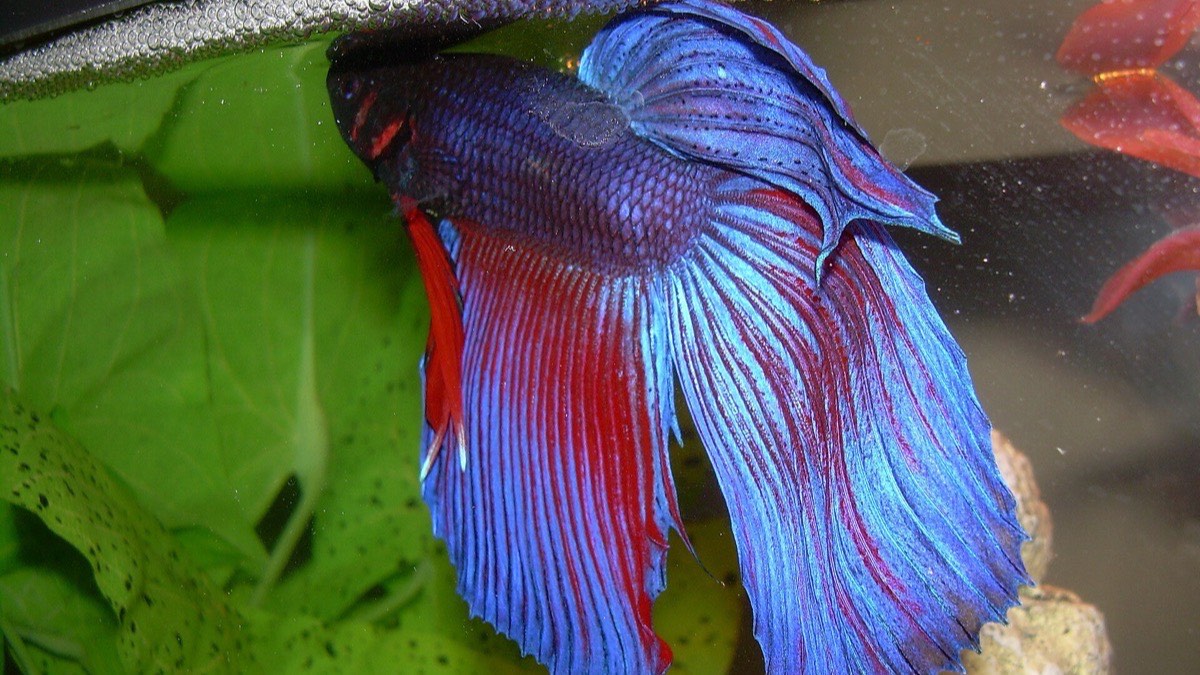
| Betta | Avoid | It mistakes colourful males for rivals and attacks them |
| Tiger barbs, angelfish | Avoid | Fin-nippers, or predators of small fish |
| Goldfish | Avoid | Coldwater fish and a big eater: incompatible needs |
For the most-asked-about pairing, we’ve devoted a whole article to guppies and shrimp together. And if you’re tempted by a betta, our betta care guide explains why it’s better to give it a tank of its own.
Maintenance, week by week
A well-run guppy tank takes little time, but it does need consistency. Here’s the routine to follow, ticking things off as the week goes by:
- Every day: feed sparingly, watch their behaviour, check the thermometer
- Every week: change 20–30% of the water, treated and at the same temperature
- Every week: vacuum the substrate where debris builds up
- Every 2 weeks: test the water (nitrite, nitrate, pH)
- Every month: rinse the filter sponges in tank water, never tap water
- Regularly: keep an eye on numbers and remove any rotting plants
The most common mistakes
Beginners fall into the same traps again and again:
- Adding fish to an uncycled tank: it’s the leading cause of fish dying one after another. The nitrogen cycle isn’t optional.
- Too many males: the females wear themselves out and spend their time hiding.
- Overfeeding: the water deteriorates and algae take off.
- Too strong a current: long-finned guppies exhaust themselves fighting it.
- Letting the population explode with no plan: the tank becomes overcrowded and the water unstable.
Finally, a few signs should set alarm bells ringing: fins clamped against the body, a fish that stays motionless at the bottom or the surface, white spots or ragged fins. Whatever the symptom, your first move is to test the water: the vast majority of problems start there. If the symptoms persist, ask a specialist aquatic shop or a vet with fish experience for advice.
The guppy deserves its reputation as the ideal beginner's fish: hardy in decent water, lively, stunning in a group. We knock off half a point for two reasons: the fragility of some fancy strains, and breeding that has to be planned for from day one. Choose "males only" or "a mixed group with a plan", and it will repay you a hundred times over.
Conclusion
The guppy is a generous fish, as long as you respect a few basics: a cycled tank of at least 54–60 L, heated to between 22 and 26 °C, fairly hard water, gentle filtration and a ratio of one male to two or three females. Feed little but varied, change the water every week, and above all decide from the outset what you’ll do about breeding.
To put it all into practice, see how many guppies to keep in 60 litres. Looking for a slightly hardier cousin? The platy has the same needs: see how many platies in 60 litres. And to kit yourself out without getting it wrong, read our guide to the best beginner aquarium kit.
Frequently asked questions
What size tank do guppies need?
Allow at least 54 to 60 litres for a small mixed group of guppies. A males-only group can make do with a well-maintained tank of around 40 litres. The bigger the tank, the more stable the water stays and the more easily it absorbs the extra fish that breeding brings.
What temperature and water do guppies need?
Between 22 and 26 °C (24-25 °C is ideal), in fairly hard, slightly alkaline water: pH 7 to 8, hardness (GH) of around 10 to 20 °dGH. Tap water is often a very good fit, as long as it's treated with a water conditioner.
How long do guppies live?
On average 2 to 3 years in an aquarium. Heavily line-bred ‘fancy’ strains with huge fins often live a little less. Clean water, a stable temperature and a varied diet make all the difference.
What do guppies eat?
Guppies are omnivores: good-quality flakes or micro pellets as the staple, topped up 2 to 3 times a week with frozen or live foods (brine shrimp, daphnia) and a little plant matter (spirulina). One or two small feeds a day, as much as they eat in 1 to 2 minutes.
How do you tell a male guppy from a female?
The male is smaller (about 3 cm) and very colourful, with a large tail fin and an anal fin modified into a pointed reproductive organ, the gonopodium. The female is bigger (4 to 6 cm), rounder and often duller, with a fan-shaped anal fin and a dark patch near the belly when she's pregnant.